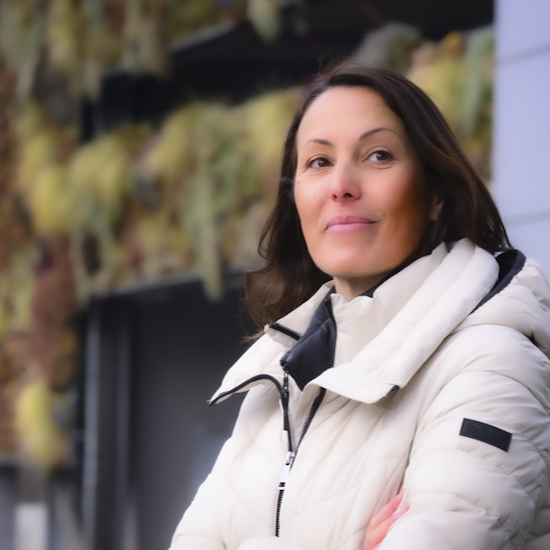
Julia Mahamid, PhD
Julia Mahamid studied biology at the Technion – Israel Institute of Technology in Haifa, and obtained her PhD at the department of Structural Biology, Faculty of Chemistry from the Weizmann Institute of Science in Rehovot in 2010 under the mentorship of Lia Addadi and Steve Weiner. Supported by EMBO and HFSP postdoctoral fellowships she moved to the Max Planck Institute of Biochemistry in Martinsried to work with Wolfgang Baumeister and in collaboration with Anthony Hyman.
Her postdoctoral work established a synergistic combination of advanced cryogenic sample preparation methods, including cryo-focused ion beam (FIB) micromachining, and state-of-the-art 3D imaging capabilities to provide unprecedented 3D molecular-resolution information from unperturbed frozen-hydrated cells. With the understanding that processes inherent to metazoans (in developmental, tissue and disease biology) can often not be recapitulated in simplified 2D cell culture models, she co-developed a cryo-FIB lift-out strategy for visual proteomics in multicellular specimens. To attain precise cryo-FIB targeting of rare and dynamic assemblies in cells, she spearheaded developments for 3D cryo-correlative light and electron microscopy. An example of her early work is her publication of the molecular sociology at the HeLa cell nuclear periphery from 2016, which is widely accepted as a landmark in the in-cell cryo-electron tomography field.
Since 2017, she leads an international and collaborative research group at the EMBL that continues to develop cryo-electron tomography to achieved unprecedented resolution and insights into complex biology, and to establish it as key technology for structural cell biology. In 2024, she became head of the Molecular Systems Biology Unit at the EMBL, with her research increasingly integrating multi-omics and systems biology approaches to bridge mechanistic and system-level understanding. The group’s research strongly build on their contributions in 2020 towards the transforming possibility to image macromolecular complexes inside cells at close to atomic resolution, and to directly reveal how fine macromolecular compositional and conformational states are linked to biological functions.
In acknowledgment of her scientific and training activities, she was awarded the 2021 Ernst Ruska Prize of the German Society for Electron Microscopy, the 2023 EMBO Gold Medal, the 2024 Michael and Kate Bárány Award of the Biophysical Society, the 2026 Leibniz Prize of the German Research Foundation. She was elected as a member of EMBO in 2023, and of the Leopoldina National Academy of Sciences in 2026.
Kuggie Vallee Distinguished Lecture - October 26, 2026 - University of California, Berkeley.
Photo copyright DFG/David Ausserhofer